


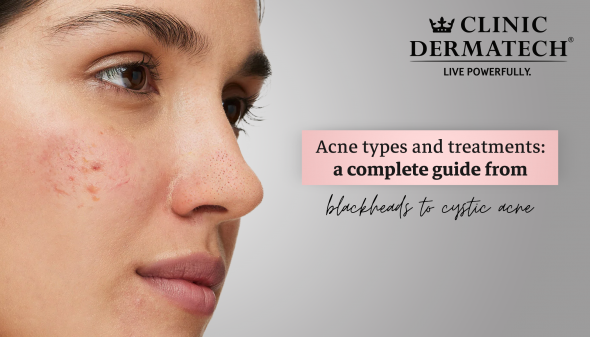
Acne Types And Treatments: A Complete Guide From Blackheads To Cystic Acne
You notice a bump. Then another. Maybe a white one this time, followed by a deep, painful lump that catches you off guard. What started as a single pimple has become a cluster, and nothing you’ve tried seems to work consistently.
The confusion makes sense. Acne isn’t one condition; it’s several different problems that look similar but behave in completely different ways. A blackhead, a whitehead, and a cyst require different approaches. Using the wrong treatment can backfire, making things worse instead of better.
Once you understand what type of acne you’re actually dealing with, everything changes. Your skincare becomes targeted. Your results improve. You stop wasting money on products that don’t fit your situation.
Acne usually starts the same way: pores get clogged with oil, dead skin cells, and bacteria. Hormonal changes, excess oil production, stress, poor skincare habits, and environmental pollution all play a role. How deep the clog goes and how your skin reacts to it determines which type of acne forms.
Blackheads Treatment And Why Consistency Matters
Blackheads are among the mildest forms of acne, though also the most stubborn.
They form when pores stay open at the surface but get clogged underneath. The dark color isn’t dirt; it’s oxidation when the pore contents contact air. You’ll typically see them on your nose, chin, and forehead as small dark dots.
For blackhead treatment, the key approaches include regular exfoliation to clear dead skin buildup, salicylic acid-based products that penetrate pores, and professional deep cleansing treatments. These don’t disappear overnight. With the right routine, though, you can manage them effectively.
Whiteheads Removal And The Risk Of Escalation
Whiteheads form when a pore closes, trapping oil and debris underneath the skin. They look like small bumps that are white or skin-colored, slightly raised but not inflamed.
For whitehead removal, gentle exfoliation works better than aggressive scrubbing. Retinol-based products improve cell turnover and help prevent them. Most importantly, avoid picking or squeezing, as that can turn a whitehead into inflamed acne.
Early treatment matters here. A whitehead today can become a red bump tomorrow if left untreated.
Papules, Pustules, And When Inflammation Takes Over
Papules are where acne escalates. The pore is clogged and inflamed. You’ll see small red bumps with no visible pus and increased sensitivity to touch. Your body is reacting to bacteria inside the pore.
Pustules are the classic pimples people think of: red bumps with a white or yellow center, often painful, with visible pus. While tempting to pop, picking does more harm than good, leading to scars and worse breakouts.
For papules, use anti-inflammatory ingredients like niacinamide and topical treatments recommended by professionals. Skip harsh scrubs. Your skin needs gentleness more than aggressive drying at this stage.
Nodules And Cystic Acne: When To See A Professional
Nodules form deep within the skin. They’re large, hard lumps that are painful but have no visible head. Over-the-counter products can’t reach them effectively.
Cystic acne is the most severe form. You get large, soft, pus-filled lumps that hurt and often leave scarring. These usually tie to hormonal changes, genetics, or severe inflammation.
Both nodules and cystic acne need professional attention. At Clinic Dermatech, an acne dermatologist assesses your skin and creates a customized plan. This might include medical-grade treatments, laser procedures, or prescription medications. Trying to manage these alone typically makes things worse.
Understanding Acne Scars And The Treatment Window
Not all acne leaves marks, but deeper types frequently do. Scars form when the inflammation damages the skin structure below the surface. The earlier you treat serious acne, the better you can prevent scarring.
Acne scars treatment ranges from gentle approaches for mild marks to more advanced laser or microneedling procedures for deeper scarring. Prevention through early professional intervention is your best strategy.
Hormonal Acne And Why Timing Matters
Hormonal acne often appears in the same locations repeatedly, usually along the jawline and chin. It ties to fluctuations in hormones rather than poor hygiene or diet alone.
If you notice a pattern linked to your cycle or other hormonal changes, mention this to a dermatologist. Hormonal acne often responds better to specific treatments that address the root cause rather than surface symptoms.
Why Treatment Approach Matters More Than Luck
One of the biggest mistakes people make is treating all acne the same way. What works for blackheads won’t work for cystic acne. Using the wrong products can actually increase irritation and worsening breakouts.
Over-exfoliating inflamed acne increases irritation. Heavy products on clogged pores worsen blockages. Ignoring deeper acne leads to long-term scarring. Each type demands a different strategy.
Understanding your acne type helps you choose the right products, avoid unnecessary damage, and see better results faster.
Acne Treatment Delhi And Personalized Professional Care
When acne is painful, persistent, leaving marks, or not responding to basic skincare, it’s time to consult a professional. This is especially true for acne treatment India, where a dermatologist can evaluate your specific situation.
At Clinic Dermatech, we assess your skin type and acne condition carefully. Rather than a one-size-fits-all approach, we create a plan that actually works for you. This can include advanced facials, laser treatments, and medical-grade skincare.
Our goal extends beyond clearing acne to improving your overall skin health. We treat the underlying causes, not just the symptoms.
Daily Habits That Support Professional Treatments
Professional pimple treatment works best with consistent daily care. Keep your skin clean but avoid over-washing, which strips natural oils and triggers more breakouts. Don’t touch or pick your face. Use non-comedogenic products that won’t clog pores. Stay consistent with your routine. Manage stress and sleep; these lifestyle factors significantly impact breakouts.
Small changes compound. Over weeks and months, you’ll notice clearer skin and fewer new breakouts.
What Timeline Should You Expect
Mild acne often improves within a few weeks with the right treatment. Deeper acne, like nodules and cysts, takes longer, sometimes two to three months, before you see real change. Some marks and scars require ongoing treatment over many months.
Patience and consistency matter more than quick fixes. The skin renews itself on a 28-day cycle. Real improvement requires allowing that process to work.
Your Path To Clearer Skin
Acne frustration is real, especially when nothing you try seems to work. But understanding that different types exist and require different approaches changes everything.
From blackheads to cystic acne, each has its own cause, behavior, and treatment strategy. The key is treating your skin based on what it actually needs, not what seems popular or convenient.
We’ve helped thousands of patients move from frustrated and confused to confident and clear. With the right care and professional guidance, clearer skin is completely achievable.
FAQS
| Q: Can different types of acne appear at the same time? | A: Yes, this is very common. Many people have blackheads, whiteheads, and inflamed bumps all present together. |
| Q: Is acne only a problem for oily skin? | A: No. Even dry or combination skin experiences acne through clogged pores and other factors. |
| Q: Does diet actually affect acne? | A: For some people, yes. Foods high in sugar and dairy can trigger breakouts, though this varies by individual. |
| Q: Can cystic acne be treated at home? | A: Mild cases might improve with patience, but severe cystic acne almost always requires professional treatment. |
| Q: Why does my acne keep coming back? | A: Recurring acne often points to hormones, lifestyle factors, or an underlying skin issue needing targeted treatment. |
| Q: Is popping pimples really harmful? | A: Yes. It causes scarring, spreads bacteria, and leads to more breakouts. |
| Q: How long does improvement take? | A: With proper treatment, you may see changes in a few weeks. Deeper acne takes longer, sometimes several months. |
| Q: Where should I seek acne treatment India? | A: Clinic Dermatech offers personalized acne solutions with dermatologists experienced in treating all acne types. |


 English
 हिन्दी