
Combat Hair Loss, PRP Solutions for Strengthening and Regrowth

Combat Hair Loss, PRP Solutions for Strengthening and Regrowth

Introduction Hair loss can be frustrating and impact self-confidence. If you’ve been struggling with thinning hair or excessive hair fall, PRP (Platelet-Rich Plasma) therapy might be the solution you’ve been looking for. This non-surgical treatment is gaining popularity due to its ability to promote natural hair growth. In this blog, we’ll discuss how PRP therapy works, its benefits, and what you can expect from the procedure. What is PRP Therapy for Hair? PRP (Platelet-Rich Plasma) therapy is a hair restoration treatment that uses the healing properties of your own blood to stimulate hair…Read more …

PRP or GFC: What’s the Best Option for You?

PRP or GFC: What’s the Best Option for You?

When it comes to hair restoration, there are several treatments available that promise to bring back your natural, healthy hair. Two of the most popular options are PRP (Platelet-Rich Plasma) and GFC (Growth Factor Concentrate) treatments. If you’re considering these treatments to combat hair loss, you might be wondering which one is the best for you. In this blog, we’ll break down the differences between PRP and GFC, discuss their benefits, and help you decide which treatment is the right choice for your needs. Understanding PRP Treatment PRP (Platelet-Rich Plasma) treatment is a…Read more …
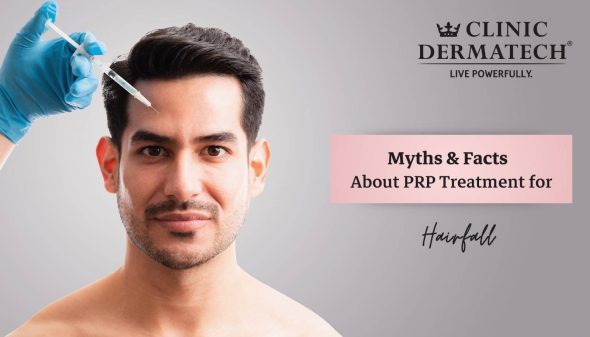
Myths & Facts About PRP Treatment for Hairfall

Myths & Facts About PRP Treatment for Hairfall

Hair loss is a common concern for many, and PRP (Platelet-Rich Plasma) therapy has emerged as a popular solution. Despite its growing popularity, several myths surround this treatment, leading to confusion and hesitation. Let's debunk common myths about PRP treatment for hair at Clinic Dermatech and set the record straight. Myth 1: PRP Therapy is Painful One of the most common myths is that PRP therapy is painful. In reality, the procedure is relatively painless. A small amount of blood is drawn, processed to extract the plasma, and then injected into the scalp.…Read more …